History of Faisal Mosque
Faisal Mosque was conceived in 1966 during a visit by King Faisal of Saudi Arabia to Pakistan. He offered to fund the construction of a grand mosque in Islamabad, and the project became a symbol of the deep friendship between the two nations.
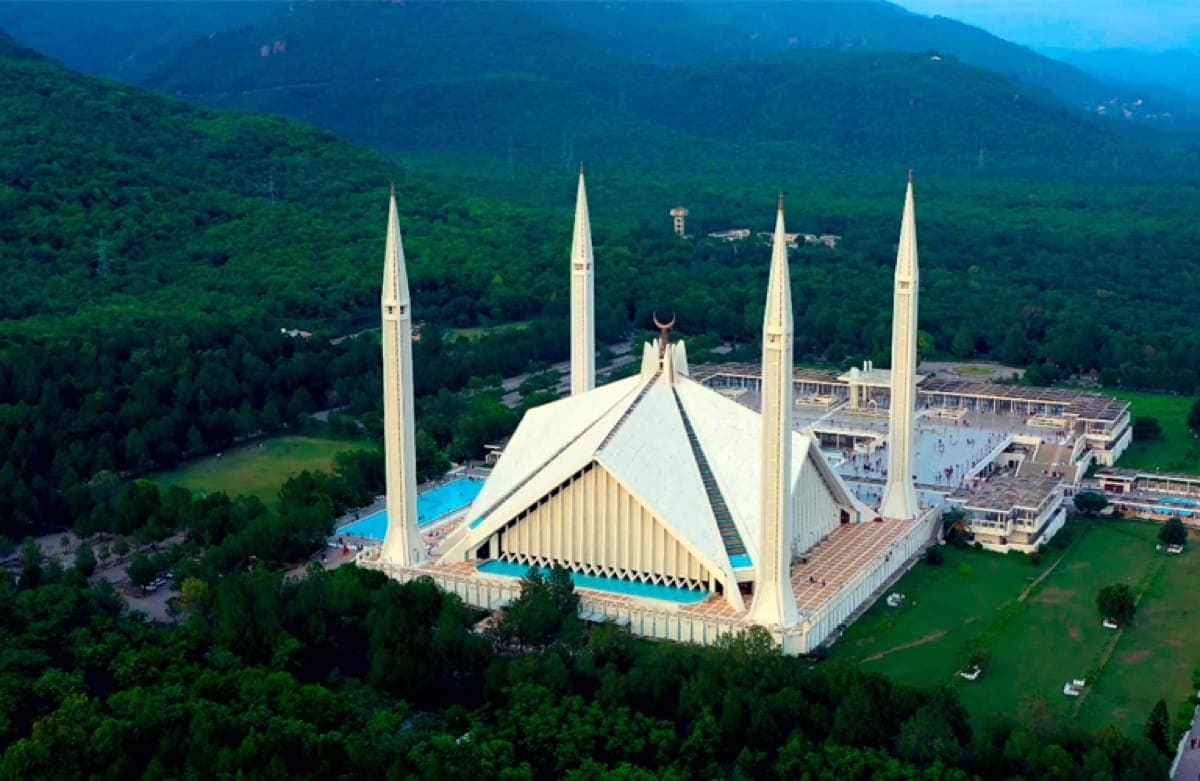
The mosque was designed by Turkish architect Vedat Dalokay, whose design was selected from an international competition. His unconventional design — eschewing traditional domes in favor of a tent-like structure — was initially controversial but has become one of the most recognized architectural symbols of Pakistan.
Construction began in 1976 and was completed in 1986 at a cost of approximately 120 million Saudi Riyals (fully funded by Saudi Arabia). The mosque was named after King Faisal, who was assassinated in 1975, to honor his contribution.
Architecture and Design
Faisal Mosque's design is inspired by a Bedouin tent — a deliberate departure from traditional mosque architecture. The main prayer hall is shaped like an enormous tent, with eight supporting trusses that create a striking angular silhouette against the Margalla Hills.
The mosque covers 5,000 square meters and can accommodate approximately 100,000 worshippers — 40,000 in the main prayer hall and 60,000 in the surrounding courtyard and porticoes. At the time of its completion, it was the largest mosque in the world.
The interior features a single chandelier gifted by the people of Sweden, intricate calligraphy by Pakistani artist Sadequain, and minimalist white marble that creates a serene, contemplative atmosphere. The mihrab (prayer niche) is a simple but elegant design in Turkish style.
- Capacity: ~100,000 worshippers (one of the largest in the world)
- Design: Bedouin tent-inspired, by Turkish architect Vedat Dalokay
- Materials: White marble, steel, and concrete
- Features: Turkish-style mihrab, Swedish chandelier, Sadequain calligraphy
- Location: Foot of Margalla Hills, visible from much of Islamabad
Getting There from Hotel Foresta
Faisal Mosque is approximately 7 km from Hotel Foresta in F-10 Markaz — a 10-minute drive via 9th Avenue. The route is straightforward and well-signposted.
Ride-hailing services like Careem and inDrive cost approximately Rs 300–500 one way. Free parking is available on the mosque grounds if you drive. The mosque is also accessible via the Islamabad Metro Bus (Faisal Mosque station).
Visiting Tips
Faisal Mosque is an active place of worship. Please follow these guidelines when visiting:
- Dress modestly — cover arms and legs. Women should cover their heads with a scarf.
- Remove shoes before entering the prayer hall — shoe storage is provided free of charge.
- Avoid visiting during prayer times (especially Friday noon prayer) unless you wish to observe quietly.
- Non-Muslim visitors are welcome outside prayer times — be respectful of worshippers.
- Photography is allowed in the courtyard and exterior. Be respectful inside the prayer hall.
- Visit early morning or late afternoon for the best lighting and fewer crowds.
- The mosque is beautifully illuminated at night — visible from many points in Islamabad.
Frequently Asked Questions
Is Faisal Mosque open to non-Muslim visitors?
Yes, Faisal Mosque welcomes visitors of all faiths outside of prayer times. Non-Muslims are asked to be respectful, dress modestly, and avoid entering during prayers. Entry is free.
How far is Faisal Mosque from Hotel Foresta?
Faisal Mosque is approximately 7 km from Hotel Foresta in F-10 Markaz — a 10-minute drive via 9th Avenue. Ride-hailing services cost approximately Rs 300–500 one way.
What is the best time to visit Faisal Mosque?
The best time to visit is early morning (8–10 AM) or late afternoon (4–6 PM) for the best lighting and fewer crowds. Avoid Friday noon prayer time unless you wish to observe quietly.
Is there an entry fee for Faisal Mosque?
No, entry to Faisal Mosque is completely free. There are no tickets or entrance fees. Shoe storage is also provided free of charge.
Can I take photos inside Faisal Mosque?
Photography is allowed in the courtyard and exterior areas. Inside the main prayer hall, be respectful and ask if photography is permitted. Avoid using flash or tripods during prayer times.